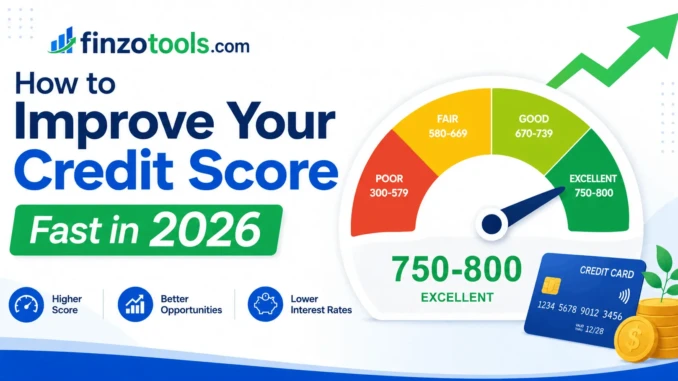
How to Improve Your Credit Score Fast: 12 Proven Strategies That Really Work in 2026
A strong credit score can open doors to lower interest rates, better credit card offers, easier loan approvals, and even improved chances of renting an apartment. If your score has dropped or you’re starting from scratch, the good news is that you can begin improving it today with the right financial habits.
Although there is no legitimate way to raise a credit score overnight, there are proven strategies that can help you see meaningful progress within a few months. Your payment history, credit utilization, account age, and overall financial behavior all play an important role in determining your score. Understanding how these factors work is the first step toward rebuilding your financial reputation.
Whether your goal is qualifying for a mortgage, financing a car, getting approved for a rewards credit card, or simply strengthening your financial profile, this guide explains the most effective methods to improve your credit score quickly and responsibly.
Why Your Credit Score Is So Important
Your credit score is more than just a number. Lenders use it to estimate how likely you are to repay borrowed money, but many other organizations also consider it when making financial decisions.
A higher score may help you:
- Qualify for lower mortgage interest rates.
- Get approved for better credit cards.
- Reduce the cost of auto loans.
- Improve your chances of renting an apartment.
- Receive higher credit limits.
- Save thousands of dollars in interest over time.
Even increasing your score by 50 to 100 points can make a significant financial difference.
Understand What Makes Up Your Credit Score
Before trying to improve your score, it’s important to know what influences it.
Payment History
Payment history carries the greatest weight. Missing even one payment can negatively affect your score for years.
Credit Utilization
This measures how much of your available credit you’re using.
For example:
- Credit limit: $5,000
- Balance: $1,000
- Utilization: 20%
Experts generally recommend staying below 30%, while keeping utilization under 10% often produces the strongest results.
Length of Credit History
Older accounts demonstrate long-term financial responsibility.
Credit Mix
Having different types of credit—such as credit cards, auto loans, and personal loans—can strengthen your profile when managed responsibly.
New Credit Applications
Each hard inquiry may temporarily lower your score. Applying for several credit products within a short period can make lenders cautious.
12 Proven Ways to Improve Your Credit Score Fast
1. Always Pay Every Bill on Time
Nothing improves a credit score more consistently than paying bills before their due dates.
Set up:
- Automatic payments
- Calendar reminders
- Bank alerts
A perfect payment history builds trust with lenders.
2. Lower Your Credit Card Balances
Reducing outstanding balances is often one of the fastest ways to increase a credit score.
If possible:
- Pay more than the minimum.
- Make multiple payments during the month.
- Focus on cards with the highest utilization first.
3. Keep Credit Utilization Below 30%
Suppose you have:
- Card A: $3,000 limit
- Card B: $2,000 limit
Your total available credit is $5,000.
Ideally, your combined balances should stay below $1,500.
Keeping balances below $500 may provide even better results.
4. Don’t Close Old Credit Cards
Many people think closing unused cards improves their credit.
In reality, older accounts increase the average age of your credit history and help reduce utilization.
Unless an account has expensive annual fees, keeping it open is often beneficial.
5. Become an Authorized User
If a trusted family member has excellent credit habits, becoming an authorized user on their credit card may strengthen your own credit profile.
Their positive payment history and low utilization can sometimes benefit your score.
6. Dispute Credit Report Errors
Mistakes happen.
Common reporting errors include:
- Incorrect late payments
- Duplicate accounts
- Accounts that don’t belong to you
- Incorrect balances
Correcting inaccurate information may lead to noticeable score improvements.
7. Limit New Credit Applications
Every application generates a hard inquiry.
Multiple inquiries within a short period may reduce your score temporarily.
Only apply when necessary.
8. Consider a Secured Credit Card
For people rebuilding credit, secured credit cards remain one of the safest options.
Responsible use can establish positive payment history while keeping spending under control.
9. Pay Off Collections Whenever Possible
Although paid collections may remain on your report for some time, resolving outstanding debts improves your financial profile and may increase approval chances for future loans.
10. Diversify Your Credit Responsibly
Having both revolving credit and installment loans may benefit your score over time.
Examples include:
- Credit cards
- Auto loans
- Student loans
- Personal loans
Never borrow money simply to improve your credit.
11. Monitor Your Credit Regularly
Checking your credit reports helps you:
- Track improvements.
- Detect identity theft.
- Find reporting mistakes.
- Understand what lenders see.
Monitoring also keeps you motivated as your score gradually rises.
12. Be Patient and Stay Consistent
Many people expect dramatic improvements within a few weeks.
Real credit building takes time.
The people who achieve excellent scores are usually those who develop consistent financial habits month after month.
Habits That Can Hurt Your Credit Score
Avoid these common mistakes:
- Missing payments
- Maxing out credit cards
- Applying for too many loans
- Ignoring collection notices
- Closing your oldest accounts
- Making only minimum payments indefinitely
Small mistakes repeated over time often cause more damage than one isolated financial setback.
How Long Does It Take to Improve Your Credit Score?
The timeline depends on your current situation.
If your credit issues are relatively minor, you may notice improvement within three to six months.
More serious situations, such as bankruptcy or multiple collections, may require one to several years of consistent financial management.
The important point is that every positive payment contributes to rebuilding your financial reputation.
Simple Monthly Credit Improvement Checklist
Each month, remember to:
- Pay every bill before the due date.
- Keep credit utilization below 30%.
- Review your account balances.
- Avoid unnecessary credit applications.
- Monitor your credit reports.
- Build an emergency fund to reduce future borrowing.
These habits may seem small individually, but together they create long-term financial stability.

Sé el primero en comentar